Biomechanics Labs Map Pressure Points to Advance Hand Protection in Boxing, Volleyball, and Swimming
Lars Schröder · Oct 1, 2026
Biomechanics Labs Map Pressure Points to Advance Hand Protection in Boxing, Volleyball, and Swimming
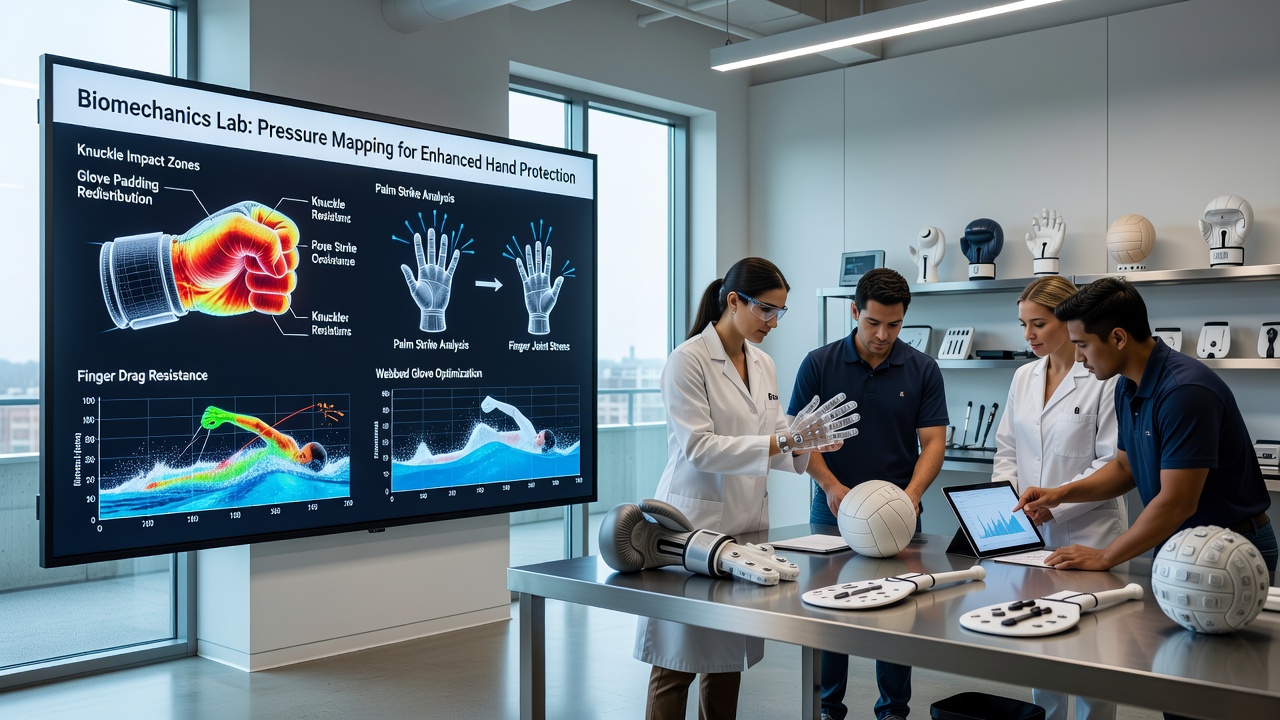
Biomechanics laboratories employ thin-film pressure sensors, force plates, and motion-capture systems to record localized forces on the hand during repeated athletic movements, and these measurements directly inform the placement of padding, seams, and flexible zones in protective equipment for boxing, volleyball spiking, and swimming training aids.
Pressure Mapping Technology and Data Collection Protocols
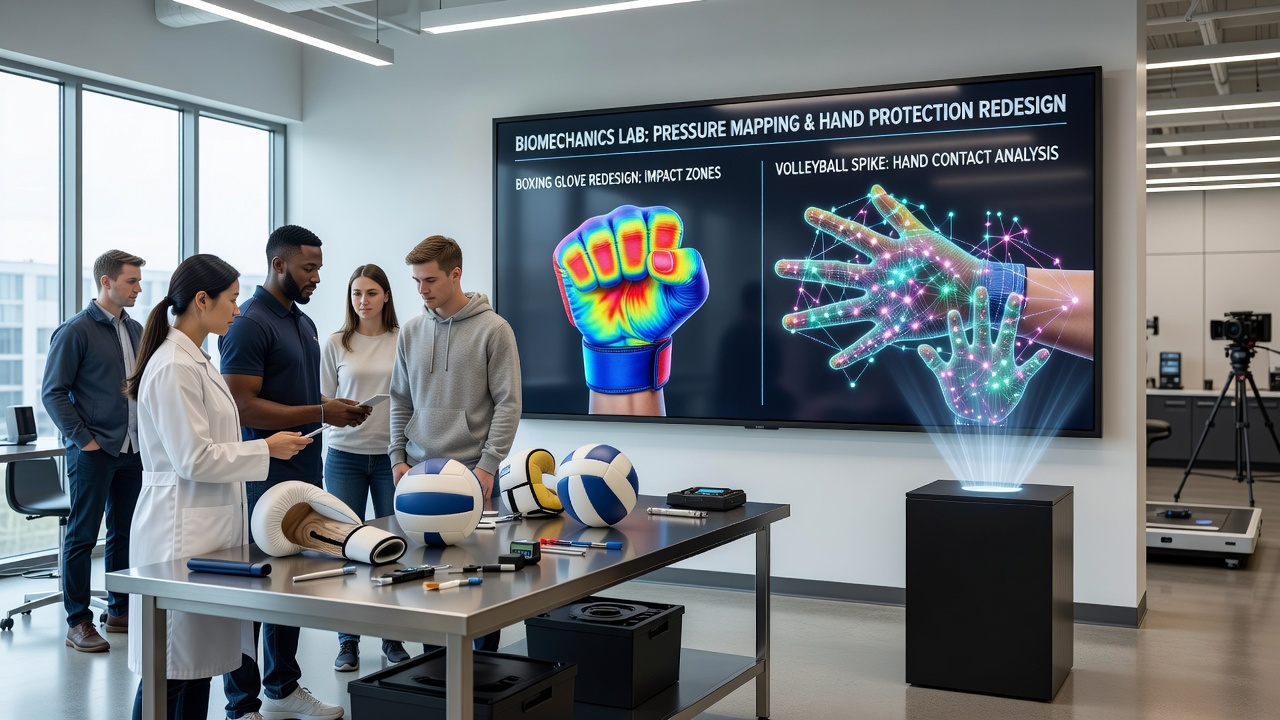
Technicians attach arrays of capacitive or resistive sensors to the palmar surface, dorsal knuckles, finger pads, and web spaces, then capture peak pressures and contact durations at sampling rates exceeding 500 hertz while athletes perform sport-specific tasks under controlled loads. The resulting heat maps reveal that boxing punches concentrate forces above 3,000 newtons at the second and third metacarpal heads, volleyball spikes generate shear forces exceeding 800 newtons across the proximal interphalangeal joints during follow-through, and swimming pull phases create distributed hydrodynamic pressures between 150 and 400 pascals along the entire hand plane. Researchers cross-reference these readings with high-speed video to correlate joint angles and muscle activation patterns, which allows design teams to adjust material thickness without adding unnecessary bulk that could restrict range of motion.
Application in Boxing Glove Construction
Manufacturers have repositioned multi-density foam layers in competition gloves so that high-pressure zones identified in lab trials receive additional EVA or latex padding while lower-load areas retain lighter, more breathable knit panels. This redistribution reduces peak knuckle loading by measurable percentages during standardized bag-testing protocols conducted at facilities in the United States and Australia. Training mitts now incorporate segmented wrist straps that accommodate the measured flexion angles recorded when athletes transition between jab and cross combinations, and the updated seam placements minimize pressure spikes that previously appeared along the radial border of the hand.
Volleyball Spiking Equipment Adjustments
Specialized finger sleeves and palm inserts for volleyball players incorporate viscoelastic inserts at locations corresponding to the highest recorded contact pressures during approach and arm swing sequences. Laboratory sessions conducted with collegiate and professional athletes demonstrate that targeted reinforcement at the metacarpophalangeal joints lowers transmitted force during repeated spikes, which in turn correlates with reduced reports of finger joint strain across monitored training blocks. Some manufacturers have introduced tapered padding profiles that follow the natural arch of the hand rather than uniform layers, a change prompted by three-dimensional pressure data collected during indoor and beach volleyball drills.
Swimming Stroke Training Aids and Hand Protection
Swimmers training with resistance paddles or hand paddles encounter hydrodynamic forces that labs now quantify to refine paddle stiffness and surface texture. Data collected from elite athletes performing freestyle and butterfly strokes show that pressure peaks shift along the hand from entry through the pull phase, prompting designers to add contoured edges and variable-thickness silicone grips that reduce localized stress on the thumb web and hypothenar eminence. Several programs have introduced lightweight neoprene wraps for open-water swimmers that maintain sensor-derived pressure distribution while allowing full finger extension during recovery phases. These modifications appear in products tested through collaborative efforts involving institutions such as the Australian Institute of Sport and European sports engineering centers.
Cross-Sport Integration and October 2026 Developments
Shared sensor platforms now permit simultaneous testing across disciplines, revealing that certain knuckle and finger pressure patterns recur in modified forms when athletes move from dry-land striking sports into aquatic resistance work. In October 2026, a multi-institution symposium presented aggregated datasets showing consistent reductions in peak pressure when redesigned handwear incorporated mapped reinforcement zones, with follow-up field trials scheduled across boxing gyms, volleyball academies, and swim clubs through the subsequent competitive season. Industry reports indicate that supply chains have begun incorporating these findings into next-generation protective layers for mixed-training athletes who rotate between contact and aquatic sessions.
Measurement Standards and Regulatory Context
Standards organizations in North America and the European Union have started referencing biomechanical pressure thresholds when evaluating protective equipment submissions, which encourages consistent testing methodologies across laboratories. Figures released by the National Center for Biotechnology Information archives document ongoing studies that track injury incidence alongside equipment modifications, providing longitudinal context for the design changes now entering commercial production. These protocols emphasize repeatability, calibration verification, and athlete-specific scaling so that equipment accommodates variations in hand size and grip strength without compromising the protective intent derived from the original pressure maps.
Conclusion
Biomechanics laboratories continue to refine sensor arrays and analysis pipelines that translate raw pressure distributions into targeted equipment modifications for boxing gloves, volleyball hand protection, and swimming training aids. The integration of these findings into commercial products reflects iterative collaboration between researchers, manufacturers, and governing bodies, with data from controlled trials guiding material placement and structural adjustments that align with observed force patterns across each sport. Ongoing work scheduled beyond October 2026 will expand sample sizes and incorporate real-time feedback systems that further link laboratory measurements to on-field performance and injury monitoring.