Laboratory Simulations of Extreme Weather Effects on Sports Equipment
Zara Russell · Oct 15, 2026
Laboratory Simulations of Extreme Weather Effects on Sports Equipment
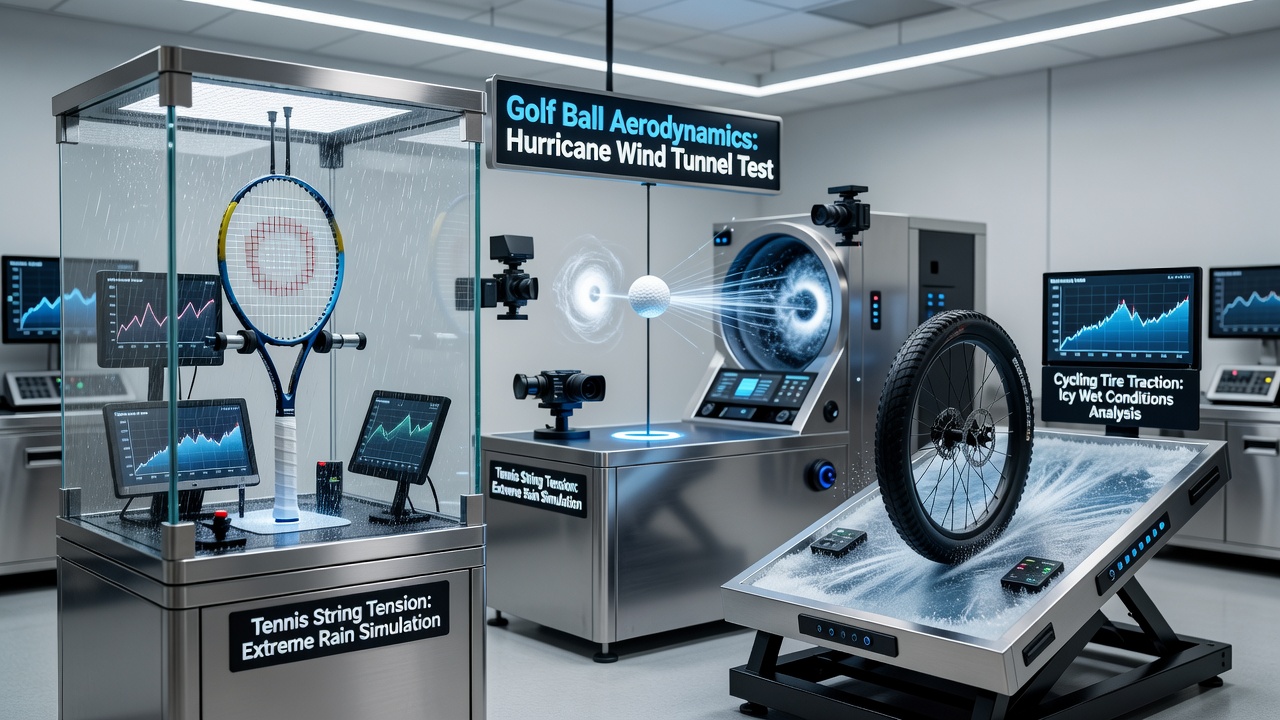
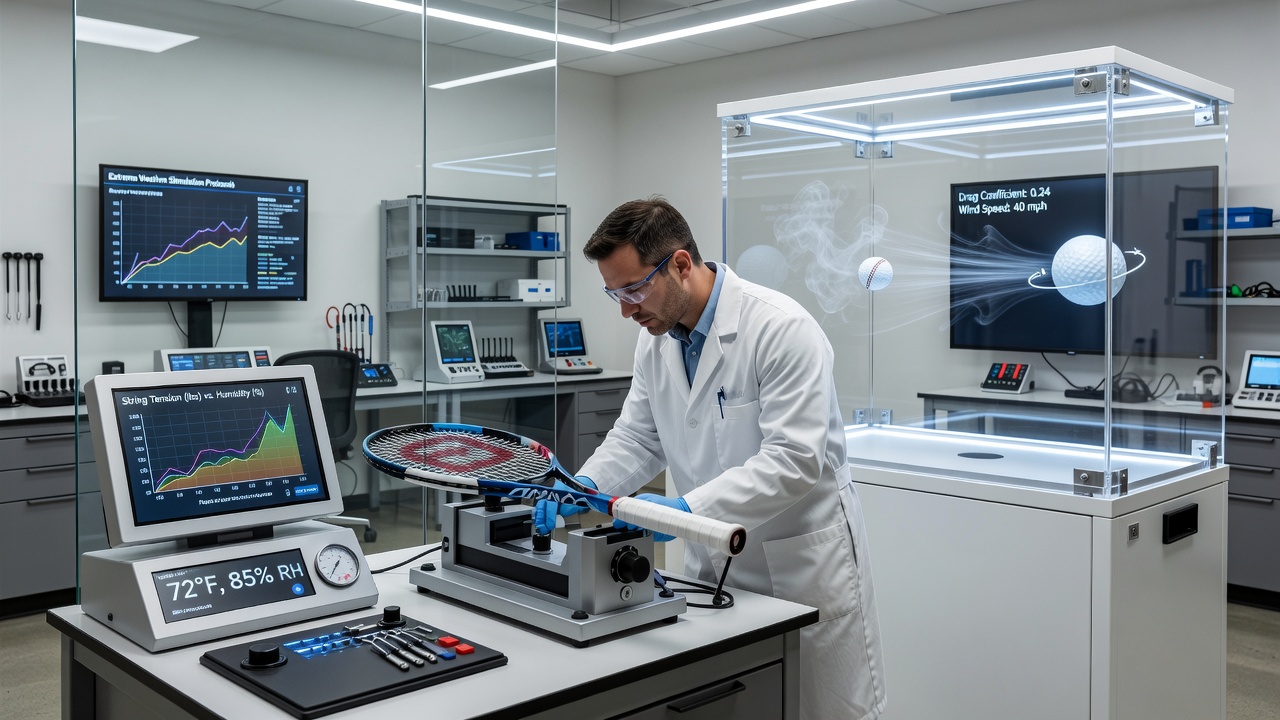
Researchers conduct controlled experiments in specialized facilities to examine how temperature extremes, humidity variations, wind patterns, and precipitation influence equipment behavior across multiple sports, with protocols often running continuously through periods like October 2026 to capture seasonal data shifts. These setups replicate conditions ranging from subzero cold snaps to scorching desert heat, allowing precise measurement of material responses without relying on unpredictable field environments. Tennis string tension undergoes notable changes under thermal stress, as polymers expand or contract depending on ambient temperatures and moisture levels. Labs use climate-controlled chambers equipped with tension gauges and automated stringing machines to apply consistent loads while cycling through temperature ranges from -10°C to 50°C, combined with humidity settings between 20% and 90%. Data collected shows that polyester strings lose up to 15% of initial tension after prolonged exposure to high heat and humidity cycles, whereas natural gut maintains better stability but absorbs moisture more readily in wet simulations. Golf ball aerodynamics receive similar scrutiny through wind tunnel integrations within environmental simulators that introduce rain, fog, and variable air densities. Engineers track lift and drag coefficients using high-speed cameras and sensor arrays while balls travel through controlled airflow at speeds mimicking professional drives, with conditions adjusted to reflect monsoon-level precipitation or icy particle interference. Studies indicate that dimple patterns perform differently when surface temperatures drop below freezing, altering spin rates and flight paths in measurable ways according to reports from the National Oceanic and Atmospheric Administration. Cycling tire traction testing occurs on dynamometer rollers housed inside chambers that spray water, apply ice layers, or heat surfaces to simulate asphalt expansion during heatwaves. Force sensors record grip coefficients across tread compounds while tires rotate under loads equivalent to rider weight plus bike mass, with protocols including rapid temperature swings to mimic dawn-to-midday transitions common in endurance events. Results demonstrate that rubber hardness increases in cold conditions, reducing contact patch effectiveness on wet surfaces until compounds warm through friction. Facilities often combine these three testing streams into unified protocols because shared material science principles apply across string polymers, ball covers, and tire rubbers. One setup described in recent industry reports alternates between extreme dryness that cracks surface coatings and high-UV exposure that degrades elastomers, providing comparative datasets for manufacturers seeking consistent performance standards.Simulation Equipment and Measurement Techniques
Advanced rigs incorporate programmable logic controllers that adjust environmental variables in real time while logging thousands of data points per minute through embedded strain gauges, anemometers, and thermal imaging systems. Researchers calibrate these instruments against reference standards maintained by national metrology institutes, ensuring repeatability across trials conducted at different global sites.
Comparative Findings Across Disciplines
Parallel experiments reveal that humidity affects adhesion properties in all three categories, though the mechanisms differ because tennis strings rely on elastic recovery, golf balls depend on surface smoothness for laminar flow, and cycling tires require micro-scale friction at the contact interface. When labs introduce combined stressors such as heat plus wind-driven rain, performance degradation accelerates compared with isolated variables, prompting equipment designers to incorporate hybrid materials tested under these compounded scenarios.
Regional Research Contributions
European laboratories have contributed datasets on cold-weather cycling tire behavior that complement North American work focused on heat effects on golf ball covers, while Australian centers examine high-UV impacts on tennis strings in arid simulations. These collaborative exchanges occur through shared databases that standardize reporting formats, allowing cross-validation of results from facilities operating under different regulatory frameworks.
Conclusion
Ongoing laboratory programs continue to refine simulation accuracy by incorporating real-time weather modeling inputs, producing actionable specifications that equipment producers apply during development cycles. The integration of these findings supports consistent performance expectations regardless of the environmental conditions athletes encounter in competition settings worldwide.